English
 Italian
 German
 French
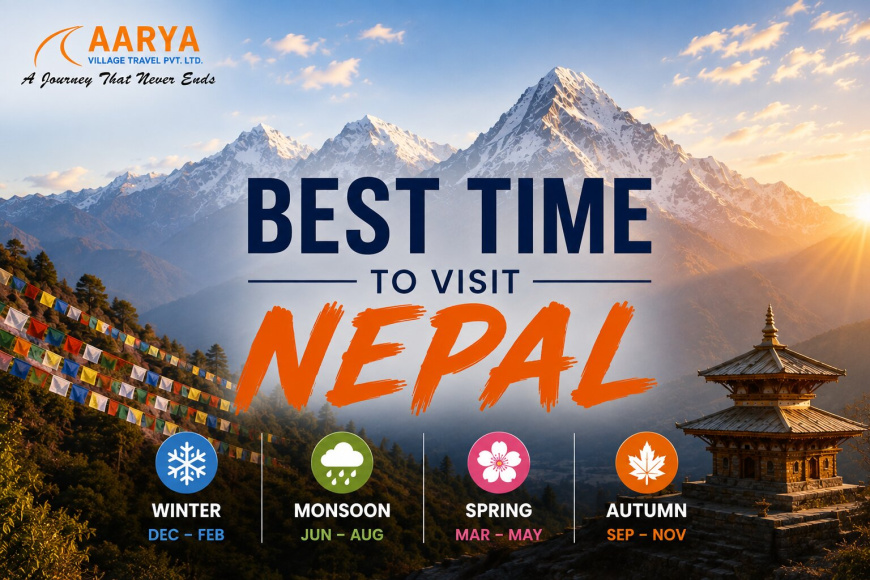
Best Time to Visit Nepal
Best Time to Visit Nepal: A Season-by-Season Guide
The best time to visit Nepal is spring (March–May) or autumn (September–November), when skies are clear, trails are dry, and Nepal's biggest festivals Dashain, Tihar, and Holi line up with the calendar. October is the single best month for mountain views. But the right month really depends on what you're doing: trekkers want spring or autumn, wildlife-watchers do well in winter, and travelers chasing quiet trails and lower prices should look at the shoulder months either side of peak season.
Nepal runs from steamy jungle lowlands in the south to some of the highest mountains on earth in the north, so its weather isn't one thing it's several, stacked by altitude. That's the real key to picking your month: not just "spring and autumn are best," but which spring, which altitude, and which part of the country.
Nepal at a Glance: Month by Month
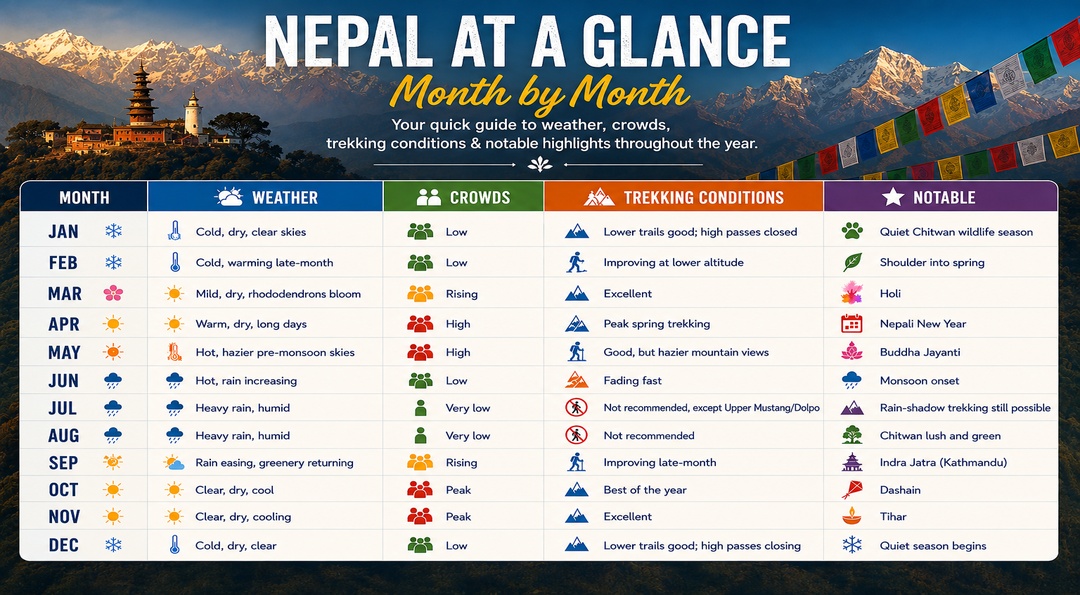
Spring (March–May): Nepal's Bloom Season
Spring is Nepal's most popular trekking window for good reason. Days are warm, skies are mostly clear, and the hillsides along Everest and Annapurant trails turn red and pink as rhododendrons — Nepal's national flower come into bloom. Long daylight hours mean more hiking time per day.
Two festivals fall in this window: Holi (March), when streets fill with color powder and water fights, and Nepali New Year (mid-April). If you want a festival to build a trip around, April gives you both good weather and a cultural event on the same trip.
The trade-off: April is peak season, which means the busiest trails, the highest flight and lodge prices, and the earliest booking deadlines. [Link: Best Time for the Everest Base Camp Trek] breaks down which specific weeks in April to book early and which are quieter.
Autumn (September–November): Nepal's Favorite Season
Once the monsoon clears in late September, Nepal gets its best weather of the year dry air, deep blue skies, and the clearest mountain views of any season. October and November are peak season for a reason: this is when photographers, trekkers, and first-time visitors all get the postcard version of Nepal.
Autumn also carries Nepal's two biggest festivals. Dashain, a 15-day celebration in late September or October, is the country's most important holiday expect closed shops, family gatherings, and a genuinely festive atmosphere in Kathmandu. Tihar, the festival of lights, follows in October or November, with homes and streets lit by oil lamps.
Real trade-off worth knowing: "autumn is crowded" is true for specific weeks the two weeks around Dashain and the first half of October on routes like Everest Base Camp not the entire season. Late October and November still deliver excellent weather with noticeably thinner crowds. [Link: Best Time for the Everest Base Camp Trek] has the week-by-week breakdown.
Winter (December–February): Cold, Clear, and Quiet
Winter is Nepal's most underrated season. Kathmandu stays mild during the day and drops close to freezing at night; up in the mountains, it's genuinely cold, and heavy snow can close high passes. But you get clear skies, rock-bottom crowds, and some of the sharpest mountain views of the year plus the easiest flight and lodge availability if you're booking last-minute.
One honest flag: early-morning fog is common in the Kathmandu Valley in December and January, and it can delay mountain flights (including Lukla) by a few hours. It's rarely a full-day loss, but any winter itinerary with a scenic flight or Everest Base Camp trek should build in a buffer day something [Aarya Village Travel/Link: your itinerary planning page] does by default on winter departures.
Lower-altitude trails like Poon Hill stay accessible all winter, and Chitwan National Park is at its best for wildlife spotting this time of year, since drier undergrowth makes animals easier to see.
Monsoon (June–September): Not a Dead Season
Most guides tell you to skip Nepal entirely from June to September. That's overcorrecting. Roughly 80% of Nepal's annual rainfall falls in these months, and high-altitude trekking genuinely isn't worth it — trails turn to mud and clouds block the views you came for.
But two things are true at the same time: this is Nepal's quietest, cheapest travel window, and a few regions barely feel the monsoon at all. Upper Mustang and Dolpo sit in the Himalayan rain shadow and stay dry through the season — this is actually the better time to trek there, since the passes are more reliably open than in winter. Chitwan turns lush and green, and wildlife is active. In Kathmandu, rain tends to fall in short, heavy bursts rather than all day, so mornings are often clear enough for temple visits and city sightseeing before the afternoon rain rolls in.
If a client asks about monsoon travel, the honest answer isn't "don't go" it's "go to the right places."
Best Time by Trip Type
Everest Base Camp or Annapurna trekking: Spring or autumn. For the specific weeks that balance good weather against lower crowds, see [Link: Best Time for the Everest Base Camp Trek].
Luxury travel and helicopter tours: Autumn gives the most reliable flying weather for scenic and heli-trek combinations; spring is a close second. Monsoon and deep winter mornings carry the highest risk of weather delays for helicopter itineraries. [Link: Luxury Nepal Tours]
Combining Nepal with Bhutan or Tibet: Autumn works best across all three, since it's also peak season for Bhutan's festivals and clear-weather driving season across the Tibetan plateau. [Link: Nepal, Bhutan & Tibet Tours]
Families and first-time visitors: Spring (April) or autumn (October–November) offer the easiest weather, though October/April also mean earlier booking and higher prices — plan lodging and permits several months out. [Link: Family Nepal Tours]
Wildlife and Chitwan safaris: Winter and monsoon, when animals are easier to spot around water sources and in thinner undergrowth.
Frequently Asked Questions
Is Nepal safe to visit in winter? Yes. Lower-altitude regions like Kathmandu, Pokhara, and Chitwan stay fully accessible through winter. High mountain passes can close with snow, so winter treks should stick to lower routes like Poon Hill or build in flexible days for higher trails.
Can you visit Nepal during monsoon season? Yes, though high-altitude trekking isn't recommended. Rain-shadow regions like Upper Mustang and Dolpo, along with Chitwan and Kathmandu Valley sightseeing, work well during monsoon.
What's the cheapest time to visit Nepal? Monsoon (June–August) and deep winter (December–January) have the lowest flight and lodge prices, since they fall outside peak trekking season.
What's the best month for clear Everest views? October and November typically offer the clearest, most consistent mountain views of the year.
Do I need to avoid monsoon if I'm not trekking? Not necessarily. Kathmandu's monsoon rain usually falls in short bursts rather than all day, leaving clear mornings for temple visits and city sightseeing.
Planning Your Trip
Spring and autumn will always be Nepal's headline seasons and for good reason. But the best time to visit Nepal really depends on your route, your altitude, and what you want to see. A trekking itinerary built for October looks nothing like a wildlife trip built for January.